Each year, BFSHOW, The biggest footwear tradeshow in Latin America, reinforces its commitment to ESG initiatives in its execution. In 2025, both editions — held by the Brazilian Footwear Industries Association (Abicalçados) and organized by NürnbergMesse Brasil (NMB) — achieved efficiency rates above 80% in the sorting and proper disposal of collected recyclables, according to the NMB Sustainability Report for Events 2025.
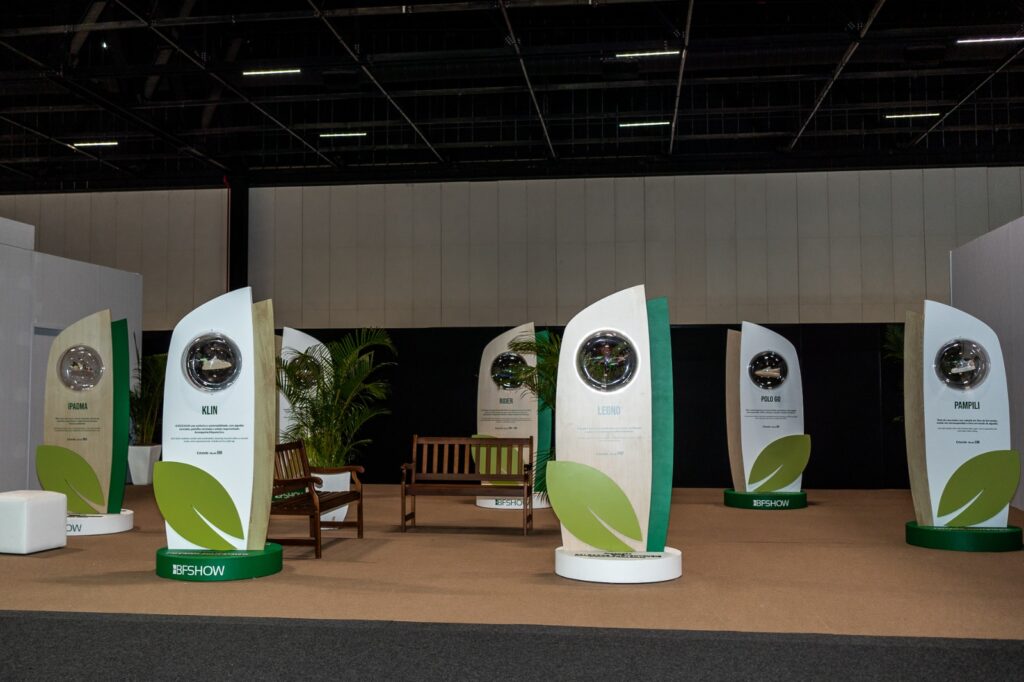
This time, in addition to waste management initiatives and positions allocated to social workforce within the staff attendees were able to explore a new edition of the Sustainable Footwear exhibition, which presents a selection of models from exhibitors that reflect the sector’s commitment to best ESG practices. In its 6th edition, visitors had the opportunity to experience up close projects from the brands Klin, Polo Go, Usaflex, Rider, Legno, Pampili, and Ipanema. In common, all stand out for their use of sustainable materials and lower environmental impact in production.
“At Grendene, we don’t have just a single sustainability or ESG initiative, but an entire journey focused on environmental responsibility that began 15 years ago. We have a comprehensive mapping of the actions needed across our operations, with a focus on the product while also placing the consumer at the center of this system,” says Carlos André Carvalho, Sustainability Division Manager at Grendene — the company behind the Rider brand.
For the exhibition, the Rider Shot NBA toe-post slipper — inspired by the NBA universe — was selected. The model combines design and environmental responsibility, featuring a low-carbon footprint production process. The sole is painted with 100% water-based ink, a technology that eliminates the release of Volatile Organic Compounds (VOCs) during application, contributing to reduced occupational health risks and lower environmental impact. “This model also features eco-efficient production, with a low carbon footprint, totaling just 254 gCO₂e/pair and water consumption of 1.49 L/pair. At the end of its life cycle, the product is fully recyclable through the reverse logistics program, Grendene Recicla +, promoting material circularity,” he adds. The brand holds the highest level (Diamond) of the Origem Sustentável seal, the only global ESG certification exclusively dedicated to the footwear sector, promoted by the Brazilian Footwear Industries Association and Assintecal.
Meanwhile, the flat presented by Usaflex at the exhibition represents the brand’s progress in integrating comfort, production efficiency, and environmental responsibility. According to Alexandre Matte Jr., beyond the use of a specific sustainable material, the product also reflects a series of practices and structural advancements that are already part of Usaflex’s ESG strategy and production system, connecting innovation, industrial efficiency, and circular economy. “The product’s presence at the exhibition allowed us to highlight initiatives that are part of the company’s overall operations. Among them is the reuse of leather scraps generated during production, which are sent to industrial partners and transformed, through thermal hydrolysis, into organic fertilizers. This solution replaces traditional disposal processes, reduces environmental impacts, and creates a connection between industry and agribusiness. In addition, the leathers used by the company come from suppliers with recognized sustainability certifications and practices,” he explains.
Another highlight is the reuse of textile waste, such as cacharel and foams, which are sent to partners that use these materials in the production of mattresses and upholstery, extending the lifecycle of inputs and strengthening circular economy practices. Usaflex also holds the Diamond Seal of the Origem Sustentável program.
Premium and certified leather
Luxury footwear has also carved out space within the sector’s ESG agenda. At Legno, a premium handmade women’s footwear brand, the production process combines artisanal techniques with eco-efficient practices — resulting in exclusive, refined pieces that are also socially responsible. The brand works with suppliers certified by the Leather Working Group (LWG), the leading global environmental certification for the leather industry, which assesses tanneries on water and energy use, waste management, traceability, and chemical safety. handmade premium, o processo de produção alia técnicas artesanais a práticas ecoeficientes – o que resulta em peças exclusivas, refinadas e conscientes socialmente. A marca trabalha com fornecedores com selo LWG, principal certificação ambiental global para a indústria do couro, que avalia os curtumes quanto ao uso de água e energia, gestão de resíduos, rastreabilidade e segurança química.
“The model on display is made from pirarucu leather, which is also certified. We only work with this type of material. The heels of our shoes are made from pine wood sourced from reforestation areas. We are committed to being as sustainable as possible,” says Denis Freitas, Commercial Director of the brand.
The exhibition creates an important opportunity for the brands present at the trade show to demonstrate how innovation, comfort, and sustainability can move forward together within the Brazilian footwear industry. “The product (on display) drew significant attention from visitors. We noticed strong interest from the public in understanding how the footwear industry can evolve in sustainability beyond material selection, also encompassing production efficiency, waste reuse, and impact reduction throughout the manufacturing process,” concludes Alexandre, from Usaflex.